

When people talk about the nature of experience—whether exploring the sensory consciousness of a place, accumulating practical knowledge, or engaging in personal encounters—they are touching on something deeply universal. Yet, understanding what experience truly means takes on a unique texture when anchored in a specific local setting. In a vibrant coastal neighborhood like Green Point, every interaction, walk along the promenade, and quiet moment of observation becomes part of a personal narrative. From the bustling atmosphere of Cape Town down to the peaceful, wind-swept stretches near Bloubergstrand, residents and visitors alike constantly evaluate what it means to live through, undergo, and learn from their surroundings.
To unpack this concept fully, it helps to examine the most frequent questions people ask about experience: how it shapes our daily lives, how we accumulate practical wisdom through direct engagement, and how different local environments—from the urban energy of the City Bowl to the quiet charm of Durbanville—influence our perceptions. Whether you are wandering through the architectural contrasts of Century City, enjoying the coastal luxury of Camps Bay, or exploring the historic streets of Bellville and Brackenfell, the way we process reality is deeply tied to our physical and cultural geography. Even as far afield as Ceres, Caledon, and Beaufort West, the underlying human questions remain remarkably consistent.
What Does It Mean to Truly Experience a Place Like Green Point?
At its core, experience refers to conscious events in the widest sense: perceptions, sensations, and the practical familiarity that grows out of them. When someone asks what it is like to experience Green Point, they are usually looking beyond a simple checklist of tourist sights. They want to know what it feels like to witness the Atlantic spray on a crisp morning, to hear the hum of local cafes, and to engage firsthand with a community that blends historic character with modern urban living.
Direct experience is a fundamental key to learning because it makes abstract concepts vivid and undeniable. Reading about a coastal neighborhood in an English dictionary or travel guide only goes so far; actually walking through the streets of Green Point, transitioning seamlessly into the broader rhythm of Cape Town, or catching a glimpse of a distant yellow bird against the Atlantic horizon offers a different order of reality. Psychologists and philosophers note that human experience encompasses both single, spectacular events—like a sudden change of heart or a breathtaking sunset over the ocean—and the gradual accumulation of practical wisdom over time.

When we compare this to neighboring areas, the nuances become even clearer. While the bustling commercial hubs of Century City and Bellville offer a fast-paced corporate experience, and places like Durbanville or Brackenfell provide a more suburban, vineyard-adjacent tranquility, Green Point maintains a distinct urban-coastal balance. It is a place where every encounter—whether meeting a stranger at a local market or observing the daily ebb and flow of the tides—contributes to an ongoing personal archive of knowledge.
How Do Accumulated Knowledge and Direct Perception Shape Our Daily Lives?
Another common question revolves around the relationship between what we observe and what we eventually “know.” Accumulated knowledge is built through countless small instances of personally encountering or undergoing situations. In the context of our daily routines, this means that the longer we live in or visit a particular region, the more refined our understanding becomes. A first-time visitor stepping out into Clifton might be struck purely by the visual grandeur of the boulders and the sea, while someone with years of familiarity views the same landscape through a lens of memory, weather patterns, and personal history.
This dynamic extends across the wider Western Cape. A traveler journeying from the dramatic mountain passes of Ceres out toward the vast expanses of Beaufort West or the agricultural heritage of Caledon will notice how drastically the physical environment alters human perception. Yet, whether one is navigating the bustling streets of the City Bowl, relaxing by the shores of Bloubergstrand, or taking in the scenic vistas of Camps Bay, the fundamental mechanism is the same: the mind organizes sensory inputs into coherent patterns, gradually producing the practical intelligence and intuition we rely on every day.
People often wonder whether indirect learning—such as reading books, studying maps, or listening to stories—can ever truly replace direct contact. Philosophers of experience argue that while secondary information is useful, it lacks the visceral punch of firsthand encounter. Knowing about a place from a distance is vastly different from feeling the wind off the Atlantic while standing on the Green Point common. That direct immersion is what transforms a casual observation into genuine understanding.
Why Do Different People Interpret the Same Local Environment Differently?
A fascinating aspect of human experience is its subjective nature. Two people can walk down the exact same street in Green Point, yet walk away with entirely different impressions. One might focus on the architectural evolution of the buildings and the lively social scene, while another might be acutely aware of the natural elements—the salt in the air, the cry of gulls, or the shifting light of late afternoon. This variance proves that experience is not merely a passive recording of external facts; it is an active collaboration between the observer and the environment.
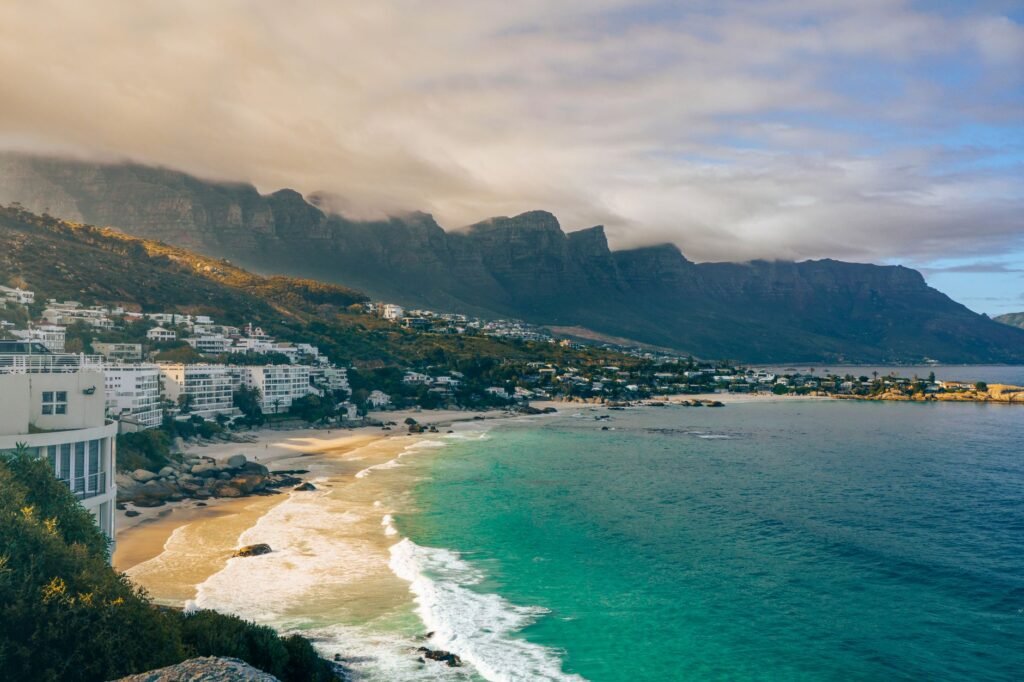
This subjective lens becomes even more apparent when we look at how different towns and neighborhoods evoke distinct emotional responses. The bustling energy found in parts of Bellville or the family-oriented suburban pace of Brackenfell might feel entirely normal to a lifelong resident, while someone accustomed to the quiet rustic charm of Caledon or the expansive quiet of Beaufort West might find it overwhelming. Similarly, the upscale vibrancy of Camps Bay offers a sensory profile entirely distinct from the working-class or industrial rhythms found in other corners of the province. By recognizing that no two people experience a place in precisely the same way, we open ourselves up to a deeper appreciation of diverse perspectives and shared human stories.
Ultimately, whether you are examining the philosophical definitions of consciousness or simply trying to understand the unique atmosphere of Green Point and its surrounding areas—from the high-rise energy of the City Bowl to the coastal stretches of Bloubergstrand—experience remains our ultimate teacher. It bridges the gap between the abstract and the real, anchoring our memories in the tangible geography of the Western Cape.
Explore locally






No one commented yet. Be the first.